
Installing solar panels is one of the best investments Australian homeowners can make, but getting…
Decoding Solar Panel Efficiency Percentages: A Homeowner’s Guide to the Numbers
When shopping for solar panels in Tasmania, you’ll quickly encounter efficiency ratings plastered across product specifications. A panel might boast 22% efficiency while another claims 19%, but what do these percentages actually tell you about performance? More importantly, should efficiency be your main deciding factor when investing in solar for your Hobart home? Understanding what these numbers represent helps you make smarter decisions about your solar investment and avoid paying premium prices for features you might not need.
What Do Solar Panel Efficiency Ratings Actually Measure?
Solar panel efficiency is simply the percentage of sunlight that gets converted into usable electricity. If a panel has a 20% efficiency rating, it means that one-fifth of the solar energy hitting its surface gets transformed into power for your home, while the remaining 80% is reflected or converted to heat.
This measurement is taken under standard test conditions in a laboratory, where panels face controlled light intensity, temperature, and air mass. Think of it like a car’s fuel economy rating tested on a perfect road with ideal conditions. The panel receives 1000 watts of light per square metre at 25 degrees Celsius, and researchers measure how much electricity it produces.
The efficiency rating tells you how well a panel uses the space available on your roof. A more efficient panel generates more power from the same amount of roof area compared to a less efficient one. This becomes particularly relevant for Hobart homes with limited roof space or sections of roof that receive optimal sun exposure.
How Efficiency Ratings Impact Your Energy Production and Savings
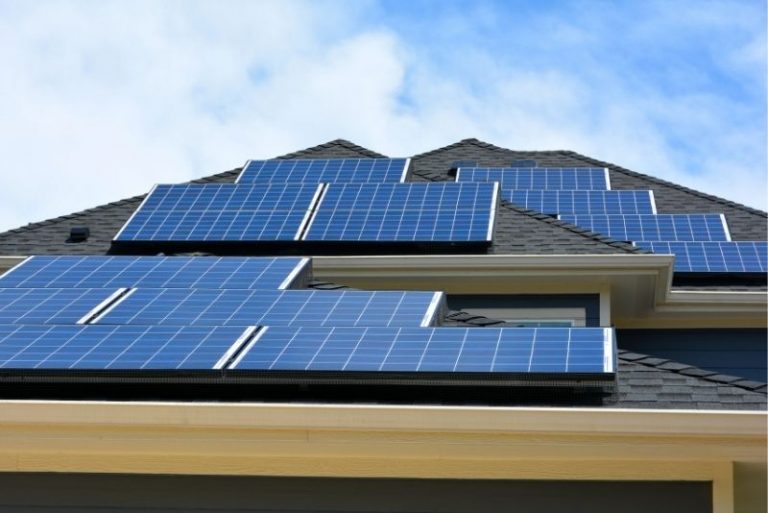
Higher efficiency panels produce more kilowatts from less roof space, which matters in several practical situations. If your Hobart property has a smaller roof or significant shading from nearby trees or buildings, efficient panels help you maximise the available area. A home needing 6.6kW of solar capacity might fit this on a compact roof section with high-efficiency panels, whereas standard panels would require more space.
The relationship between efficiency and savings isn’t always straightforward. Two solar systems producing the same total power will generate similar electricity savings regardless of individual panel efficiency. A 6.6kW system using twenty 330-watt panels produces the same annual output as one using eighteen 366-watt high-efficiency panels, assuming both receive identical sunlight.
Where efficiency ratings truly impact your pocket is in installation costs and roof utilisation. Fewer high-efficiency panels mean less racking, fewer roof penetrations, and potentially reduced installation labour. However, premium efficient panels often cost significantly more per watt, which can offset these installation savings. Solar Power Hobart helps customers calculate whether the premium for higher efficiency panels makes financial sense for their specific property and energy needs.
Typical Efficiency Ranges: What’s Good, Better, and Best in 2026
Most residential solar panels installed in Australia today fall between 18% and 23% efficiency. Budget-friendly panels typically range from 18% to 20% efficiency and represent solid, proven technology that performs reliably in Tasmanian conditions. These panels work perfectly well for homes with adequate roof space and deliver excellent long-term value.
Mid-range panels sit between 20% and 21.5% efficiency, offering a balance between performance and cost. These represent the sweet spot for many Hobart installations, providing good power output without the premium pricing of top-tier options. Most quality solar installations across Tasmania use panels in this range.
Premium panels achieving 22% to 23% efficiency use the latest cell technologies and materials. These high-performance options suit properties where roof space is limited or where maximising output from available area justifies the additional investment. Some commercial-grade panels even exceed 23% efficiency, though these rarely make economic sense for residential installations.
Laboratory prototypes have achieved efficiencies above 26%, but these aren’t yet commercially available for home installations. For practical purposes, anything above 21% represents excellent efficiency for residential solar in 2026.
Why Higher Efficiency Doesn’t Always Mean Better Value for Your Home
The most efficient panel isn’t automatically the best choice for your property. A premium 23% efficient panel might cost 40% more than a quality 20% efficient panel while only producing 15% more power. If you have ample north-facing roof space in Hobart, installing a few extra standard-efficiency panels often costs less than buying fewer premium panels.
Your roof characteristics matter more than small efficiency differences. A well-designed system using 20% efficient panels with optimal orientation and minimal shading will outperform a poorly positioned system using 22% efficient panels. Factors like your roof pitch, direction, and shade patterns have a greater impact on real-world production than a few percentage points of efficiency.
Consider your actual energy needs rather than chasing maximum efficiency. A family using 25kWh daily doesn’t benefit from squeezing an oversized system onto their roof using ultra-efficient panels. Solar Power Hobart designs systems matching your consumption patterns and roof characteristics, selecting panel efficiency that makes practical and financial sense.
Warranty terms, manufacturer reputation, and local support often matter more than efficiency ratings. A reliable 20% efficient panel backed by strong warranties and local service outperforms a 23% efficient panel from a manufacturer with questionable longevity or poor Australian support networks.
Real-World Performance vs Lab Ratings: What Australian Conditions Mean for Efficiency
Laboratory efficiency ratings use perfect conditions that rarely exist on actual Hobart roofs. Real-world performance varies based on temperature, angle, dust, and weather patterns. Solar panels actually become less efficient as they heat up, and Tasmania’s cooler climate gives you an advantage here. While laboratory tests use 25 degrees, panels often reach 50 to 70 degrees on hot Australian roofs, reducing efficiency by several percentage points.
Hobart’s climate works in your favour for solar panel performance. Cooler temperatures mean panels operate closer to their rated efficiency more often than systems in Queensland or Western Australia. Your panels lose less efficiency to heat, partially offsetting any disadvantage from Tasmania’s lower sun intensity compared to northern states.
Dust, bird droppings, and salt spray in coastal Hobart areas reduce light reaching solar cells, impacting efficiency regardless of the panel’s rating. Regular rain helps keep Tasmanian panels cleaner than those in drier Australian regions, maintaining closer-to-rated performance. However, even clean panels experience efficiency drops during Tasmania’s cloudier winter months when diffuse light dominates.
The angle and orientation of your installation affect real-world efficiency more than laboratory ratings. Panels installed flat or facing east-west produce less than their rated capacity compared to optimally tilted north-facing installations. Solar Power Hobart accounts for these real-world factors when sizing your system, ensuring adequate production regardless of the efficiency number on the specification sheet.
Ready to Find the Right Solar Solution for Your Hobart Home?
Understanding efficiency ratings helps you ask better questions and avoid paying for features that don’t match your needs. Solar Power Hobart takes the guesswork out of panel selection by assessing your roof, energy usage, and budget to recommend the right efficiency level for your situation. Whether you need maximum power from a limited space or want the best value from a larger roof area, the team provides honest advice tailored to Hobart conditions. Contact Solar Power Hobart today for a free assessment and discover which solar panel efficiency rating delivers the best return for your property.

